
INTERVIEW: Andrew Wakefield talks about the Bequest
'The aim is to sell as many books in the first 48 hours and the first week as possible'

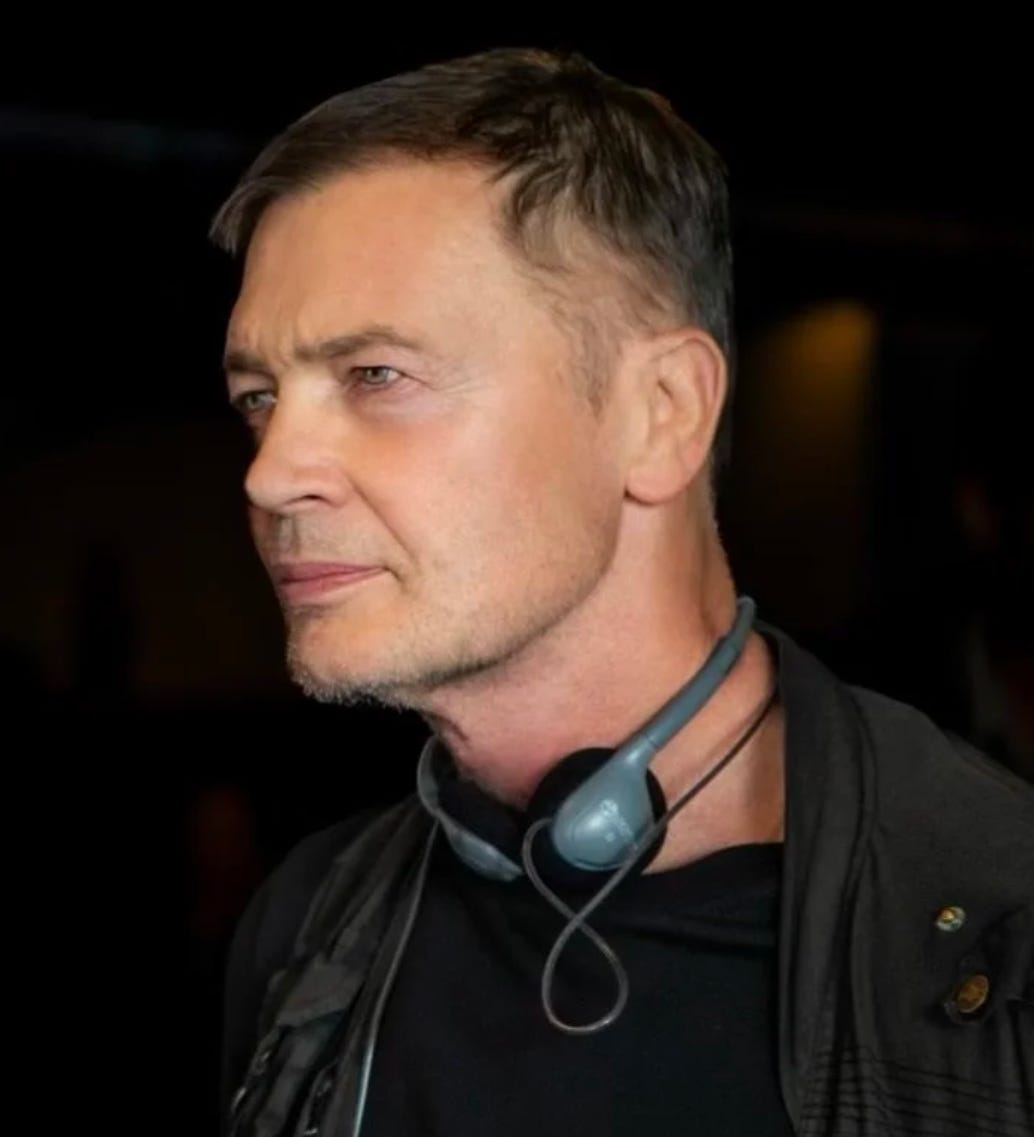
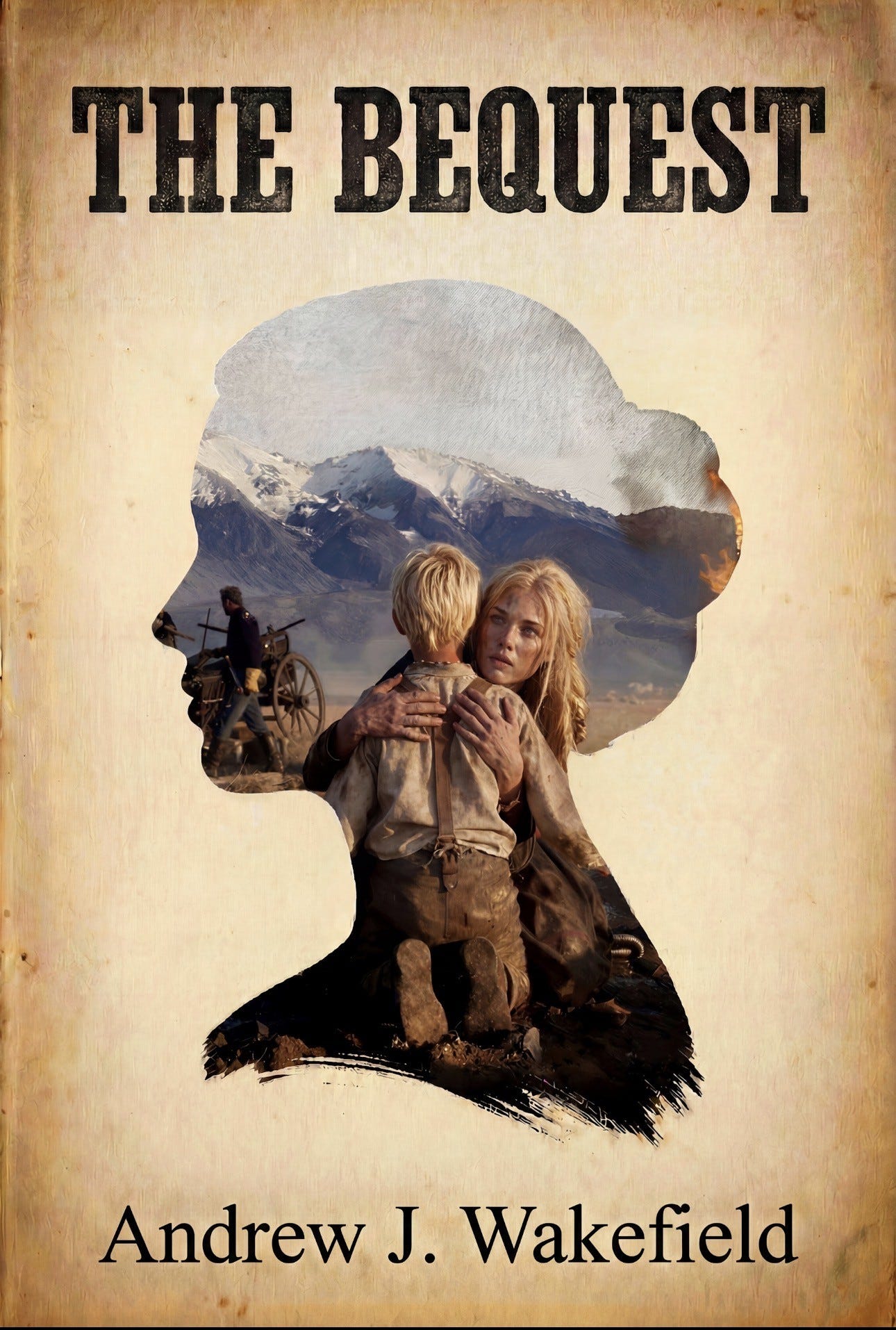
Recently autism parent Wayne Rohde interviewed Dr. Andrew Wakefield about his new book, The Bequest. What they discussed is something directly affecting everyone with an autistic child, especially if that child has profound autism:
What will happen when I’m no longer able to care for my child?
Andy addressed this question in a novel set in the late 19th century on the western frontier in America. This is what haunts parents today in the 21st century.
A widow with a son who clearly displays the characteristics of autism is left to face the future in a world that does not understand or accept her son’s disability.
“There is no one to care for them?”
Andy wrote this book to draw attention to this critical issue. While health officials refuse to admit that more children have autism, the nonstop increases among eight-year-olds tell a very different story.
VIEW: 27min. VIDEO INTERVIEW
Andy:
This is the thing that keeps them awake at night. Millions of parents across this country: What happens to my child when I'm infirmed or die because there is no one to care for them? No one understands them, and no one loves them like I do.
The media has dressed up autism as merely neurodiversity—a normal part of being human, a condition that always been around, just called something else. We’ve been conditioned over the last 20 years to celebrate autism every April.
What no one is talking about is the future when millions of these affected children become adults. Where will they live and who will care for them?
No one asks where all the autistic adults are now. No one has been able to show us a comparable rate among middle aged and elderly Americans—something that should frighten everyone.
Wayne asked Andy about the setting for his novel.
Andy:
It's a western, set in 1867 on the Oregon Trail, in one of the harshest environments in the world at that time, and it, I did that for two reasons.
One is to take it away from the issue of causation, I didn't want the issue of causation to get in the way, to cloud the key, the central issue of the book, and that was, what happens when I'm no longer here, and the second reason was because it is one of the hard, I put it in one of the harshest environments in the world, in other words, the struggle for this mother and her son, the struggle to survive in this environment is thrown into sharp relief, because it is so brutal, and that's really the background to the story. It's such an important issue that it raises— It's so much more important than many of the issues we have to deal with nowadays.
There are these millions of individuals who are faced with a future that is at the very least uncertain, and something needs to be done. It needs to be brought to the attention of the public and politicians. Action needs to be taken, because there are millions of these individuals out there who will never get justice, never get the justice they deserve, but at the very least they, they need to be protected for the rest of their lives.
Wayne has his own connection to this issue.
Well, this is very personal for me. What you talk about is because my son, Nick, now 28, nonverbal, living in adult diaper pull-ups, living at home here with us, and his brother, twin brother. . . .
And Nick, it requires a lot of care. I mean, he can do a lot of things individually, but he does require people to provide for him for his food needs, and, and medical, and toileting, and bathing, and all that. Do we, you know, force that onto his brother for the rest of, you know, Austin's life?
Urgency
Andy:
[It is] a nightmare for you every night, as you say, and something has got to be done about it. So I'm going to start from the baseline that there is no provision, and that has to be put in place, and we need to move very, very quickly on this. It's long overdue.
Wayne asked Andy why, despite HHS Secretary Robert Kennedy Jr. calling autism “an epidemic,” our health agency employees never do.
Andy:
If you accept that there is a true epidemic, which there is, then you have to accept it as an environmental cause, and the environmental cause, as Peter McCullough has recently published with Nick Hulscher, early exposure to vaccines and multiple vaccines at the same time are the key modifiable risk factors for autism.
Now the system simply cannot accept that. It will go to its grave. People like Tony Fauci, who were in it at the helm when this was happening, they will go to their graves believing that one, vaccines don't cause autism, and two, they did things absolutely correctly. No, they did not. It's an absolute disgrace, but until that is acknowledged, then they're not going to pick up the tab for helping these individuals going forward.
Wayne:
I had a conversation with Walter Zahorodny a while back, and he led on for the first time that I could tell that this was a true epidemic, and Walter is known in the, you know, with the ADDM monitoring, the autism monitoring system is like the father providing the guidance for the whole system, there. . . .
Unstoppable increases
We're going to get to a point real quickly where it's one in 10, one and 12, and we're on a trajectory that we maybe can't stop unless we have some real honest discussions. How fast? Where do we, what do you see happening in the next.. I should say five to 10 years. Where do you think the prevalence is going to be?
Andy:
Well, I think if you look at Northern Ireland now, if you look at the UK, it's one in 12 boys and rising very, very rapidly with a whole lot more needing special educational input, so it's not - it's a spectrum of not just autism, but lesser degrees of impairment that are, you know, taxing the system hugely. I think it's going to go up, and it's going to go up, and as long as they keep introducing new and useless and dangerous vaccines, like the COVID shot, for children, we're going to see a dramatic increase.
You raised a point earlier that if it does affect this number of children, and if in many cases it's the siblings who have to care for them in the long term, you're also, therefore, taking not only the affected individual, but their sibling out of the workplace, and there's a healthy person who could contribute to the economy. They won't be doing that. They will be trying to preserve the status quo. No population can sustain that kind of attrition of its workforce. You can't do it.
You're talking about ultimately half the population, half the adult population being affected or caring for someone who is affected. So it has to change, and it has to change now.
Making The Bequest a bestseller and a movie
Well, the book is going to be available on the 26th of June, the launch party is at 10 o'clock central time on Instagram at Andrew J. Wakefield. So, welcome to anyone that join us on that launch party.
The aim is to sell as many books in the first 48 hours and the first week as possible, the first 48 hours to become an Amazon bestseller, the first week to become a New York Times bestseller, and to get the message out there far and wide to inspire people to want to do something to understand the issue and want to do something about it, and I found that film is a very powerful way of doing this. Books also, but my wish, my hope, my intention - in my fact, I am determined to turn this into a fully fledged movie at the earliest opportunity.
Anne, you have written extensively about Northern Ireland. Is there something specific to Northern Ireland ?
A former friend of mine from college often says, "Vaccinate your children!"
Meanwhile, her son has special needs. I wonder if it ever occurred to her that he might not have been born that way.